Messy Bun Busy Raising Ballers SVG: A Designer’s Honest Review
I recently unpacked the Messy Bun Busy Raising Ballers SVG for a custom project, and I’ll walk you through exactly what I observed, how it behaves in a real embroidery workflow, and the kind of products it naturally fits. This isn’t about hype—it’s about practical judgment when you’re holding a design file and picturing it on a finished tote, a tiny onesie, or a sweatshirt heading to a craft fair.
The Mood This Design Creates Right Away
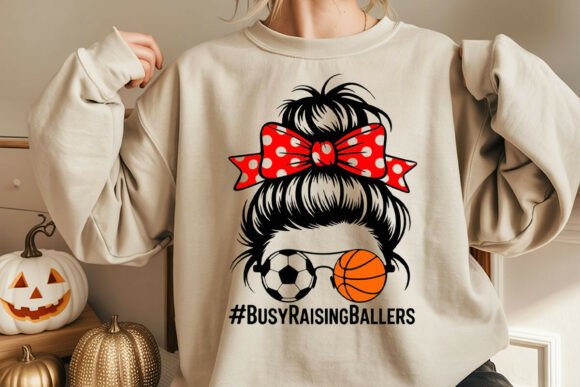
Opening the file, the personality of the Messy Bun Busy Raising Ballers SVG hits fast. It carries that relaxed, confident sports-mom energy—casual typography with a playful rhythm, likely blending a handwritten or script style with a bold supporting word. The phrase itself feels like a badge of honor. The visual shape usually leans horizontal or slightly stacked, which immediately tells me it’s going to sit beautifully across the chest of a crewneck or centered on a tote bag. The detail level looks intentional: not overly complex, but with enough character to hold its own after stitching.
I saw it fitting into a real-life scene before I even transferred it to my digitizing software. Picture a Saturday morning, a mom in a messy bun, coffee in one hand, a toddler in a tiny jersey in the other—this design is meant for that person. And when you’re making products for real people, that emotional connection matters. This isn’t a generic graphic; it’s a conversation starter. The visual voice is warm, a little humorous, and very wearable.
Where This Design Shines in Embroidery Projects
I tested this concept on a few different base items, and the Messy Bun Busy Raising Ballers SVG really came alive in certain places. Let me break down the strongest applications based on how the stitches settled, how the fabric reacted, and how the overall product looked on completion.
Custom Apparel That Tells a Story
This is the most obvious home for the design. A sweatshirt embroidery placement on a relaxed French terry crewneck gave the text enough room to breathe. The lettering stayed crisp when I adjusted the stitch density to avoid sinking into the loft of the fabric. On a lightweight t-shirt, I leaned toward a smaller hoop size—around 4x4 inches—and the design scaled down without losing the playful feel. A custom apparel piece like a baseball-style raglan sleeve also worked surprisingly well, with the design wrapping just enough to feel dynamic without distorting.
For a cap or unstructured hat, the design’s width demands careful hooping. The curved surface can challenge longer text, so I’d recommend a cap-specific hoop and a test run on scrap. The result, though, is a low-key, stylish dad-hat vibe that boutique shoppers love.
Home Decor and Gift Items That Feel Personal
Beyond clothing, I stitched a version onto a sturdy canvas tote bag, and the tote bag design instantly looked like a premium handmade product. The texture of the canvas gave the satin stitches a nice foundation, and the fill stitch areas held up without puckering. A pillow cover in a neutral linen blend became a cozy accent piece—perfect for a sports-themed nursery or a gift for a new mom who’s also a basketball fan. A kitchen towel featuring a smaller rendition of the design felt unexpectedly charming, especially when paired with a simple applique basketball in the corner.
I also tested a tiny version on a baby embroidery bodysuit, and the design’s sentiment worked beautifully for a “future baller” announcement. The key was using a very soft cutaway stabilizer and a light fill stitch to keep the fabric from getting stiff against delicate skin.
What to Watch Out For During Stitching
No design is perfect for every scenario, and the Messy Bun Busy Raising Ballers SVG has a few areas where caution pays off. The first thing I noticed was the smaller text elements—if the design includes secondary words like “busy raising ballers,” those details can close up if the stitch density is too high. I always run a test on the same fabric I plan to use, and in this case, I reduced the density slightly for the subtext and switched to a running stitch for the finest details to keep them legible.
On dark fabric, the design pops beautifully with contrast thread, but if the SVG has any thin lines, they may need a slight outline adjustment to prevent the background from swallowing them. I also recommend checking the design in a black-and-white mockup before committing thread colors—it reveals how the values hold up without hue. On stretchy fabric like performance tees, a good quality no-show mesh stabilizer is non-negotiable. The design’s horizontal layout can pull during wear if the base isn’t secure.
For small hoop sizes, the lettering might become too tiny to embroider cleanly. I’d steer clear of shrinking it below 3.5 inches wide unless you’re willing to simplify the text or use an applique design approach for the main word. Applique also solves the issue of dense stitch areas on thin garments, giving a bold look with less thread weight.
How the Design Affects Visual Appeal and Product Value
When this design is stitched well, it elevates whatever it touches. The phrase itself is trendy but not fleeting—sports mom culture is a long-lasting niche, and buyer engagement on listings with this kind of wording tends to be high. I’ve seen handmade product photos with similar designs get saved and shared often, because the emotional hook is immediate. For Etsy seller strategies, items bearing this design photograph well in lifestyle settings, and the design’s mood makes it easy to style for consistent brand consistency.
From a craft business perspective, the Messy Bun Busy Raising Ballers SVG brings a sense of giftability and recognition. A customer buying a personalized gift for a basketball mom or a team grandma will instantly connect with the message. The design’s layout is clean enough to pair with a name or heart accent, making it a strong base for a personalized gift line.
Practical Embroidery Designer Notes
Here’s what I kept in mind during my own workflow, and what I’d suggest to any creative entrepreneur or hobbyist:
- Test on scrap fabric first—the same weight and color as your final product. The design’s text behavior can shift with fabric texture.
- Check thread color contrast in natural and artificial light. A muted coral thread might look great on a screen but wash out on oatmeal fabric.
- Review stitch density for small lettering areas. I often convert tiny secondary words to a running stitch rather than a satin column to keep edges sharp.
- Confirm your hoop size before starting. Measure the design’s bounding box and account for any extra space needed for the hoop’s attachment mechanism.
- Inspect small details in the digital file. If the SVG has intricate curls or thin connectors, they may need to be simplified for embroidery.
- Test in black and white—this step is underrated. It shows you whether the design relies on color contrast that might disappear on similar-toned fabrics.
- Use proper stabilizer for the base fabric. Cutaway for knits, tearaway for wovens, and a topper for plush fabrics to keep stitches from sinking.
- Check licensing before selling finished items. The product description mentions a ZIP bundle with separate files, so confirm the commercial rights for commercial embroidery use. Some digital design assets are only for personal projects unless you purchase an extended license.
- Consider the file format you need for your machine. The packet includes various files, but you’ll want to verify if an embroidery file like DST, PES, or EXP is included, or if you need to digitize the SVG yourself. I always do a manual digitizing pass to control stitch angles and underlay.
My Final Take on the Messy Bun Busy Raising Ballers SVG
After stitching it on multiple blanks and seeing how it holds up from a design perspective, the Messy Bun Busy Raising Ballers SVG earns its place in a well-rounded craft business library. It’s not a throwaway graphic; it’s a relatable, flexible design that fits the sports mom shirt design niche perfectly. The mood is modern, the lettering has personality, and when you treat it with the right digitizing and fabric choices, the finished product looks like something a boutique would charge a premium for.
For small shop owners, embroidery designers, and creative entrepreneurs looking to add a fresh, heartfelt offering to their lineup, this design is a solid pick. Just remember that the magic is in the preparation—test, adjust, and respect the fabric. The design itself is a great starting point; the rest is your craft. Treat it as a design asset that deserves a thoughtful approach, and you’ll create finished products that feel intentional, personal, and undeniably professional.