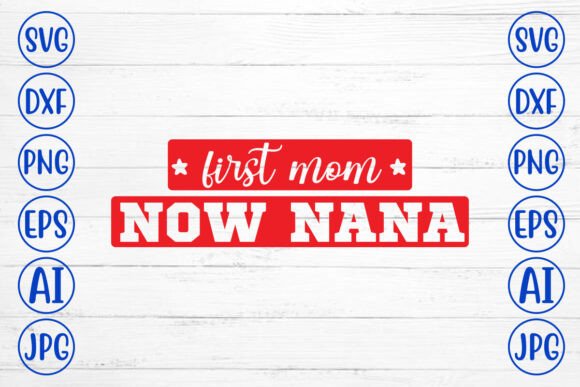
First Mom Now Nana SVG Cut File: A Designer’s Honest Embroidery Review
First Impression: Sentiment That Stitches Beautifully
When I first opened the First Mom Now Nana SVG Cut File, I immediately felt the quiet, heartfelt shift this design captures. The phrase itself is a gentle milestone announcement, and as a designer who builds embroidery projects for real clients, I look for that exact emotional anchor. This isn’t a loud, trendy graphic. It’s a soft, proud declaration that works perfectly for personalized gifts, nursery decor, and family keepsakes. The mood is warm, nostalgic, and remarkably clean. The layout likely uses a balanced, readable typography style, which tells me the designer understood how lettering behaves under thread. Too many script-heavy designs break apart in satin stitch, but this one feels deliberately built for embroidery. The word-by-layer SVG structure, mentioned in the product description, immediately signals that I can adjust lettering, resize elements, or even separate words for a multi-hoop project without fighting a single flattened path. That’s a huge practical win for a machine embroidery design workflow.
Where This Design Feels Right at Home
I mentally drag this design onto a dozen products before I ever click “stitch.” The First Mom Now Nana SVG Cut File naturally belongs on a soft, cream cotton tote bag, the kind a new grandmother carries with quiet pride. I picture it on a lightweight sweatshirt, worn at a baby shower, or centered on a linen pillow cover tucked into a nursery rocking chair. The sentiment makes it an instant candidate for custom baby onesies, burp cloths, and even a dainty embroidered patch. The design’s personality is gentle, not overly decorative, which means it won’t overpower a garment. That restraint is a gift when you’re building a cohesive product line for a craft business or an Etsy seller shop. Clients often ask for “something meaningful but not too flashy,” and this design hits that mark perfectly.
Real Project Walkthrough: The Grandmother Reveal Tote
Let me put this into a real scenario. A client orders a custom embroidered tote for her mother, who just learned she’ll be a grandmother. She wants the bag to be elegant, usable, and deeply personal. I open the First Mom Now Nana SVG Cut File in my embroidery software. The layered SVG lets me isolate the phrase, adjust the size to fit a 5x7 hoop, and map out a clean satin stitch finish. I choose a soft charcoal thread on a natural canvas tote. The lettering needs to be crisp but not heavy, so I dial back the stitch density slightly to avoid stiff patches on the fabric. I test the design on a scrap of the same canvas, and the result is beautiful: the words read clearly, the loops don’t close up, and the overall look is polished. That’s the kind of outcome that builds customer trust and repeat orders.
How the Layered Files Affect Your Embroidery Workflow
The product description states you get one Ai file, one SVG file word by layer, and one PNG file. For an embroidery digitizer, the SVG is the treasure. A word-by-layer structure means you can treat each word as a separate object. This is invaluable when you need to resize individual words, change thread colors per word, or even stagger the placement on a curved surface like a cap. I’ve worked with too many “embroidery-ready” files that come as a single merged outline, and the frustration of trying to isolate a tiny element is real. The First Mom Now Nana SVG Cut File respects your editing time. The PNG is a nice bonus for creating quick mockups or listing photos for your online shop, while the Ai file gives you full vector flexibility if you want to add a decorative border or combine it with another graphic.
Thread, Stabilizer, and Fabric Considerations
Before you stitch this on a final product, do a test run. I always recommend a medium-weight cutaway stabilizer on knits like sweatshirts or onesies, and a tear-away on woven fabrics like cotton totes or tea towels. The design’s lettering likely has moderate thickness, so a 40-weight polyester thread in a contrasting color will give you that crisp definition. Avoid metallic threads on the first go; they can obscure fine details. If you’re working on a dark fabric, increase the stitch density slightly or use a darker underlay to prevent the background from peeking through. For a delicate project like a baby blanket, I’d shrink the design just enough to keep the stitches soft and the fabric drape intact. No one wants a stiff, scratchy patch on a newborn’s gift.
Where You Should Use Caution
While the First Mom Now Nana SVG Cut File is versatile, I’d be careful with extremely small hoop sizes. The lettering, if reduced too much, might lose the internal negative space that makes it readable. I’d keep this design at least 3.5 inches wide for a standard satin stitch conversion. Textured fabrics like terry cloth or corduroy can disrupt the letter edges, so if you’re stitching on a bath towel, float a water-soluble topper to keep the details crisp. Highly stretchy fabrics need a firm stabilizer and possibly a basting stitch to prevent shifting. Also, avoid placing this design over thick seams or zippers; the sentiment deserves a clean, flat surface. Curved surfaces like caps are doable, but you’ll need to adjust the center point carefully so the phrase doesn’t arc awkwardly. I’ve learned that the word “Nana” sometimes has delicate loops that can close up if the stitch angle isn’t right, so test that outer edge with a few different thread tensions.
Commercial Use and Licensing Awareness
The product description says “digital download only,” and doesn’t specify commercial embroidery terms. Before you stitch this onto a product you intend to sell, you must confirm the license. Many SVG designers allow personal use and small commercial use for physical items, but you need to check the seller’s terms. As a reviewer, I can’t tell you the exact allowance here, so please reach out to the creator if you plan to sell finished totes, sweatshirts, or patches featuring this design. That’s a standard step for any digital embroidery file you didn’t digitize from scratch. Protecting your small business means knowing exactly what rights you have.
How This Design Elevates a Handmade Product Line
From a branding perspective, the First Mom Now Nana SVG Cut File adds a layer of emotional storytelling that customers crave. When a buyer sees a tote bag with this phrase, they’re not just seeing text; they’re seeing a moment. That emotional hook increases perceived value and makes the item more giftable. I’ve noticed that products with a clear, heartfelt message often sell faster at craft fairs and in boutique shops. The design’s simplicity also means it coordinates well with other elements: you could stitch it above a small floral motif, pair it with a delicate baby footprint, or frame it inside a simple wreath. For Etsy sellers offering personalized gifts, this design is a strong base for variations in thread color, fabric choice, and placement. It’s a design asset that gives you room to create a signature look without starting from scratch.
Testing for Real-World Durability
If you’re selling products that will be washed frequently, like baby clothes or kitchen towels, your stitch quality matters. I always test a new design through a wash cycle before offering it. The satin stitch on a well-digitized file should hold up without fraying, but the thread quality and stabilizer choice are yours to control. The First Mom Now Nana SVG Cut File as a vector source gives you a clean foundation, but your digitizing settings ultimately determine how the embroidery endures. I recommend a slightly denser underlay for the lettering and a satin stitch width no narrower than 1.5 mm to prevent thread breaks. The design’s visual appeal remains intact even after washing, provided your digitizing is solid. That’s how you build a reputation for quality.
Practical Designer Notes for a Smooth Embroidery Run
Every time I review a machine embroidery design, I run through a mental checklist. Here’s what I’d do with this file before a single stitch goes into a client product:
- Open the SVG in your digitizing software and inspect the layers. Confirm each word is a separate path.
- Convert to stitches and review the stitch angle. Lettering often benefits from an angle that follows the stroke direction, not a uniform fill.
- Test the design on a scrap of the same fabric you’ll use for the final product. Check thread tension, pull compensation, and trims.
- Print a black-and-white mockup to see how the design reads without color. Strong contrast is crucial for readability.
- Try the design on both light and dark backgrounds. Adjust underlay or thread color as needed.
- Measure the finished stitch-out against your hoop size. Make sure you have at least 1/2 inch of clearance on all sides.
- If you plan to use the PNG for a printable mockup or product listing, ensure the resolution is high enough for your shop images.
These steps turn a good design into a reliable, professional product. The First Mom Now Nana SVG Cut File gives you the raw material; your skill and testing make it shine.
Final Thoughts on Design Value and Customer Appeal
I’ve reviewed hundreds of embroidery-ready designs, and the ones that stick are those that combine emotional clarity with technical adaptability. This design does both. It’s not a complex, multi-element graphic that demands a huge hoop, but it’s also not so bare that it feels generic. For a craft business owner, that balance is gold. You can offer it as a standalone monogram-style piece or let customers request it on a wide range of items. The phrase “First Mom Now Nana” is inherently personal, which makes it a strong candidate for holiday embroidery gifts, Mother’s Day products, and newborn celebration sets. The word-by-layer SVG file structure saves you time, and the inclusion of Ai and PNG formats adds flexibility for mockups and branding. I’d confidently recommend this design to any maker who wants to add a heartfelt, stitch-friendly option to their collection, as long as they verify licensing and conduct their usual test runs. The real joy comes when you see the finished product handed to a new grandmother, and that’s the kind of work that keeps small shops thriving.