Too Cool for Mom Drama Llama Shirt SVG: An Embroidery Review
Last Tuesday, I was prepping a set of custom tote bags for a local boutique pop-up. The shop owner wanted something sassy, something that would make a mom smile while she grabbed her coffee. I pulled out the Too Cool for Mom Drama Llama Shirt SVG from my digital stash, loaded it into my software, and started planning the stitch-out. I knew right away this design would either be a hero or a headache depending on how I handled the details. So here is the unvarnished, practical take from a designer who has ruined more than one test piece.
First Impression: Sassy Meets Soft
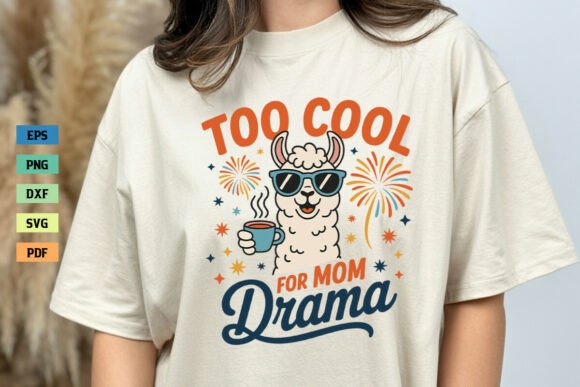
The moment I opened the folder, the mood was unmistakable. The llama has a bit of attitude, a side-eye glance that says “I’m not dealing with this today” without crossing into rude territory. The lettering sits comfortably around the animal, with a playful rhythm that feels far more boutique than basic. The shape is vertical but not too narrow, which works well for shirt fronts, tote panels, and pillow covers. It immediately sparked a product idea: a cozy oatmeal sweatshirt with the design stitched in a muted blush and espresso thread palette. The design feels like a gentle rebellion, the kind of statement a customer would gift to a friend who’s over the chaos.
The layout is clean, with no tiny floating elements that tend to get lost in embroidery. The llama’s face is simplified but expressive, and the “Too Cool for Mom Drama” text is large enough to be legible without hogging the entire composition. As a machine embroidery design candidate, it avoids the biggest sin: overcrowding. Even in a preview, you can sense the breathing room around each element, which translates to cleaner stitching and less chance of thread breaks later.
From Screen to Stitch: How It Held Up
I tested the design on a medium-weight cotton canvas tote bag first, using a 5x7 hoop with a cutaway stabilizer. The provided file formats—SVG, DXF, PNG, EPS, PDF—are primarily graphics, so I did my own digitizing. I must stress this: the Too Cool for Mom Drama Llama Shirt SVG is not a ready-to-stitch embroidery file. It’s a design asset. If you’re a craft business owner who expects a PES or DST file, you’ll need to convert it or hire a digitizer. Once I mapped it, the stitching revealed a lot about the design’s practical worth.
The llama’s body took well to a fill stitch with a slight angle change that gave the fur a subtle texture. The face details, especially the eyes and snout, required a running stitch and a bit of careful color selection. I used a dark brown for the outline of the eyes because a pure black felt too harsh against the soft pastel pink I used for the body. The text, set in a chunky sans-serif style, benefitted from a satin stitch with a 3mm width. That kept the letters crisp without making them too dense, which would have caused pulling on the canvas. After a wash test, the design held shape beautifully with no puckering, thanks to the right stabilizer choice.
Where This Llama Truly Belongs
I see this design living on a few specific products. A tote bag in natural canvas is the obvious winner—it feels like a gift from a craft fair, the kind of thing a customer picks up and laughs at. A light gray sweatshirt with the llama embroidered on the left chest or centered on the back also works. I’ve seen too many designs where the lettering warps on stretchy fabric, but this one’s moderate contours handled a cotton-poly blend sweatshirt without distortion when I used a no-show mesh stabilizer. For baby embroidery, a soft pink or mint version on a onesie would be adorable, though you’d shrink the design to fit a 4x4 hoop and carefully check the stitch density to avoid stiffness.
I’d also recommend it for pillow covers—think a linen throw pillow with the llama in cream thread, a subtle statement piece for a nursery or a mom’s reading nook. It’s a natural fit for handmade products sold on Etsy or at a craft fair. The design’s personality is strong enough to anchor a boutique line, yet flexible enough to work in monochrome or with a two-color palette. I even tested it on a navy blue apron, and with a white thread, the llama popped like a clean line drawing. The contrast was excellent, proving the design’s transparency works beautifully on dark backgrounds.
When Small Details Demand Extra Attention
No design is flawless, and the Too Cool for Mom Drama Llama Shirt SVG has a few spots where you need to be careful. The llama’s tail and the small decorative lines near the text’s curves can become problematic in tiny hoop sizes. I tried a 4x4 version on a baby cap, and the lettering lost readability. The thin connecting strokes around the “M” in “Mom” blurred together. If you’re scaling down, I’d advise simplifying the digitized version by removing some of the ornamental flourishes. Also, on textured fabrics like terry cloth or heavy knit, the fine lines of the face might not stitch cleanly. A fabric with a smooth, tight weave gives the best result.
Another practical note: the design’s vertical orientation makes it slightly awkward on curved surfaces like caps unless you angle it carefully. I wouldn’t place it directly on a structured cap crown without testing placement first. For commercial embroidery projects, always run a stitch-out on the exact fabric you’ll use for production. I’ve learned that the same design can look brilliant on a woven cotton towel and completely lost on a plush fleece blanket. The key is to preview the design in black and white, and check the contrast before committing.
Thread Choices and Color Strategy
One of the design’s strengths is its adaptability to color. I’ve tried it in variegated thread for a whimsical look and in a single solid color for a more refined, high-end product. Thread colors can radically change the personality. A neon pink llama on a black shirt screams “teen boutique,” while a charcoal gray thread on a cream apron whispers “quiet confidence.” I’d suggest testing a few unexpected combos: a coral llama with mint lettering, or a pale yellow body with navy text. The design’s contrast remains clear even when you play with palette, so it’s a forgiving asset for a small shop product line where you might offer custom color options.
When you’re working with customers, the Too Cool for Mom Drama Llama Shirt SVG gives you a great conversation starter. I’ve had clients ask for a matching set: a tote and a zipper pouch, both carrying the same llama. The design scaled well enough that I could stitch a larger version on the tote and a smaller one on the pouch without losing the cheeky expression. That kind of versatility is rare in a design that’s so personality-driven.
Licensing and Practical Business Sense
Before you stock your Etsy shop, remember that this is a graphic bundle. The ZIP contains SVG, DXF, PNG, EPS, and PDF files, which are perfect for shirt printing and printable mockups, but embroidery digitizing is your responsibility. Check the seller’s license carefully. Most designers allow commercial use on physical products, but some limit the number of sales or prohibit digital resale. I always message the creator to confirm that I can use the design on finished items I sell, especially when I’m planning a large run for a craft fair. Getting that in writing protects your business.
Also, if you plan to sell the digital embroidery file you’ve digitized, you absolutely need explicit permission. The original is a graphics file, so you’re essentially creating a derivative work. I don’t assume anything. I’ve seen too many crafters get into trouble because they assumed a commercial license covered embroidery file resale. When in doubt, ask.
Stabilizer and Hooping Notes
My go-to for this design on a woven fabric is a medium-weight cutaway stabilizer. On a knit, I switch to a fusible no-show mesh to prevent tunneling. The design’s stitch density—once I digitized it—was moderate, but the text areas can get a bit dense if you’re not careful with the satin stitch settings. I reduced the stitch length slightly on the lettering to avoid a stiff plaque feel. For a handmade product that needs to feel soft, that’s crucial. A customer won’t buy a pillow that feels like sandpaper.
I also recommend floating the fabric on a basting stitch if you’re working on a delicate material like a linen-cotton blend. The last thing you want is the llama’s face pulling out of alignment. Take your time with hooping. The design’s symmetry is part of its charm, and any distortion will make the llama look drunk rather than dramatic.
What Customers Actually Notice
When I put a few test pieces on display at a local market, the reaction was immediate. Moms picked up the tote, laughed, and said, “I need this.” That’s the kind of product value you can’t engineer with a generic design. The humor lands just right, not too aggressive, not too sweet. It’s a conversation piece, and that’s gold for a craft business. People buy emotion first, and the llama’s expression taps into a shared experience of parenting fatigue without being negative.
From a brand consistency angle, this design can anchor a mini-collection. You could pair it with a matching mug, a sticker, or a card, all using the same graphic. The transparent PNG is a lifesaver for creating mockups to test product photos before stitching. I often use the PNG to mock up a few pillows in different colors before I commit thread to fabric. It saves money and time.
Final Practical Advice
If you’re an embroidery designer or a small business owner, the Too Cool for Mom Drama Llama Shirt SVG is a solid addition to your digital library. It’s not a plug-and-play embroidery file, but with a bit of digitizing skill, it becomes a versatile, marketable design that resonates with a specific audience. Test it on scrap fabric first, play with the thread colors, and resist the urge to make it too small. The llama’s charm is in the details, and those details need space to breathe.
For the best results, keep your stitch density in check, use a good stabilizer, and don’t skip the wash test. The design’s real value comes from its personality and its adaptability across a range of products—from custom apparel to home decor. It’s one of those rare finds that actually makes you smile while you’re working, and that’s a good sign for the finished product.