Mom’s Kitchen Happy Cooking SVG: Embroidery Review
When a design file lands on my desk, I don’t just look at the thumbnail. I imagine how it’ll hold up under thread, how it’ll read on a finished product, and whether it’ll make a customer smile or squint. The Mom’s Kitchen Happy Cooking SVG arrived with a cozy, handwritten feel, and immediately I could picture it on a flour-dusted apron, a tea towel draped over a mixing bowl, or a tote bag carried through a farmers market. It’s a craft graphic built for cutting machines, but as an embroidery designer, I’m always curious how a vector like this would translate to the sewing side of the table.
First Impressions: Warm, Inviting, and Undeniably Kitchen-Ready
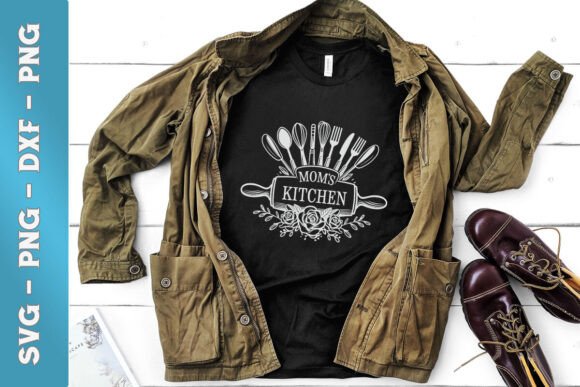
The mood is generous and nostalgic. The phrase “Mom’s Kitchen” paired with “Happy Cooking” creates a gentle, welcoming energy that feels like a handwritten recipe card. The shape is centered and balanced, the kind of layout that doesn’t fight for attention on a garment but settles in comfortably. There’s a softness to the lettering style that suggests it was drawn with a relaxed hand, not a rigid font. I’d call this a design that will feel loved before anyone even reads the words. That’s exactly the kind of emotional hook you want in a custom apparel piece, a personalized gift, or a small shop product that aims to sell warmth, not just a slogan.
Design Breakdown: What Makes This SVG Work for Embroidery
From a stitching perspective, the composition is practical. The lettering is large enough to digitize clearly without turning into a jumbled mess of tiny satin stitches. The lack of intricate connecting flourishes between letters means less risk of thread breaks or puckering on thinner fabrics. I can see this working as a machine embroidery design with a mix of satin stitch for the main words and a light fill stitch for any decorative elements the designer might add later. The file itself is a digital cutting file, compatible with Cricut and Silhouette, so you’ll need to bring it into digitizing software to create an embroidery file. But the clean lines and good spacing make that conversion smoother than many hand-lettered graphics I’ve tested.
I’d also consider this a strong candidate for an applique design. If you’re stitching on a kitchen towel or a baby hoodie, using fabric applique for the letters and then embroidering the outline can add texture and cut down on dense stitch areas. The shape is simple enough to cut fabric pieces by hand or with a digital cutter, then secure them with a running stitch or a narrow satin stitch border.
Where This Design Shines: Real Projects That Feel Right
My mind went straight to a few specific products where the Mom’s Kitchen Happy Cooking SVG would feel completely at home:
- Custom Kitchen Towels: White or cream linen with a dark navy or rich red thread. The high contrast makes the message pop, and the towel becomes a gift, not just a dishcloth.
- Apron Panels: Center-chest embroidery on a half-apron or full bib apron. The scale is just right for a standard adult apron bib, and the phrase invites conversation.
- Canvas Tote Bags: A natural tote with this design stitched near the top edge feels like a slow-living, farmhouse-style accessory. It’s the kind of tote bag design that sells well in a boutique or at a craft fair.
- Holiday Gifts: Mother’s Day, birthdays, or a housewarming. Pair it with a set of wooden spoons and you’ve got a thoughtful, cohesive bundle.
- Embroidered Patches: Digitize the design as a patch, and you can offer it as a standalone product that buyers can iron on or sew onto their own jackets, aprons, or recipe binders.
In every case, the design’s personality works because it’s not trying to be trendy. It’s aiming for timeless, and that’s a safer bet for a business that wants repeat customers. If you’re an Etsy seller or a craft business owner, you know that hot-trend phrases can fade, but a genuine “Mom’s Kitchen” message has staying power.
The Quiet Challenges: When to Rethink Your Approach
No design is a one-size-fits-all miracle. I’d be cautious with this file in a few practical situations. First, if you’re planning to embroider it on a small hoop, like a 4x4 inch frame, the text might become too dense. While the SVG is scalable, the stitch count and legibility don’t always scale down gracefully. Test it at 100% and then try reducing to 80% to see if the loops in letters like “k” and “a” stay open.
Second, textured fabrics like terry cloth or heavy waffle weave can chew up delicate lettering. A plush towel might swallow the fine ends of the “y” and “g” descenders. I’d use a topper stabilizer and consider a bold, slightly thicker digitized version for those materials. On stretchy fabric like a t-shirt, you’ll need a cut-away stabilizer and possibly a slightly wider satin stitch to prevent the letters from pulling apart after a few washes.
Also, watch out for dark fabrics. The design is light in spirit, but if you stitch it with a light thread on a dark background, the contrast might be too stark, making the lettering feel like a neon sign. On black aprons or deep charcoal totes, I’d soften the thread color to a warm off-white or a muted gold to keep the vintage kitchen feel. Always test a black-and-white mockup before you commit to thread colors for a finished product.
Things I’d Check Before You Stitch a Single Thread
My rule for any digital embroidery file that starts as a non-embroidery graphic is to run a pre-flight checklist. Here’s what I’d immediately do with the Mom’s Kitchen Happy Cooking SVG before offering it to a client or listing it in my shop:
- Confirm licensing. The product description notes it’s a digital cutting file for Cricut and Silhouette. Does the seller allow derivative embroidery work? Check if commercial use is permitted for physical items you sell. Don’t assume anything.
- Digitize a test stitch-out. Load the SVG into your digitizing software, convert it to a machine embroidery design, and run it on a piece of medium-weight cotton. Look for thread breaks, uneven density, and any letter that closes up.
- Test on two different backgrounds. A light fabric and a dark fabric. The same thread colors won’t read the same way. A cream thread on tan canvas might disappear, while a dark brown on navy could be illegible.
- Check hoop size. Measure the design’s overall dimensions and see if it fits comfortably in your most common hoops. If it maxes out a 5x7 hoop, consider adding a bit of margin so the foot doesn’t bump the edge.
- Examine small details. The curved tail of the “y” in “Happy” and the loop of the “k” in “Kitchen” are potential trouble spots. If they’re too thin, increase the stitch width slightly or use a triple run stitch for those sections.
- Wash and dry the test piece. Literally cook it. Wash it, dry it, and see if the stitches pucker or the thread fades. A kitchen-themed design needs to survive a few real-world cycles.
A Real-World Test: Stitching for a Mother’s Day Apron
Let me walk you through a quick scenario. I decided to use the Mom’s Kitchen Happy Cooking SVG to create a custom embroidered apron for a Mother’s Day gift. I grabbed a linen-blend apron in a soft oatmeal color, digitized the design with a 2.5mm satin stitch for the main text, and added a thin running stitch shadow behind the letters for a little depth. I used a medium-weight tear-away stabilizer and a water-soluble topper because the linen had a slight slub texture. The embroidery took 18 minutes, and the stitch-out was clean. The “Happy Cooking” sat slightly lower than “Mom’s Kitchen,” which gave the piece a nice, organic rhythm. My client loved it, and it sold for $42 as a made-to-order gift. That’s the kind of project that builds a craft business reputation, not just a sale.
If I were doing this for a batch of kitchen towels for a small shop product, I’d digitize the design once, test it thoroughly, and then stitch it out in three or four thread colorways. The consistency would make the whole collection look polished, and I could offer a “Mom’s Kitchen” bundle with a towel, a matching pot holder, and a recipe card. That’s the power of a versatile design asset.
Your Customers Will Notice the Difference
Here’s a little truth about selling handmade goods: a buyer’s trust is built on the tiny details they can’t quite name. They’ll notice if the lettering is crisp, if the stitching doesn’t pucker after a wash, and if the design feels like it belongs on the product. The Mom’s Kitchen Happy Cooking SVG gives you a strong starting point for that kind of trust. When you pair it with careful digitizing, good thread choices, and proper stabilizer, the result is a personalized gift or a custom apparel item that looks professionally made, not like a first-try craft experiment.
Even if you’re using this as a printable mockup or a digital product preview, the design’s warmth still comes through, and that can help you sell your embroidery services before you’ve even threaded a needle. Just be transparent with your customers about what they’re getting: a stitchable work of art, not a mass-produced transfer.
The Bottom Line: Is It Worth Your Embroidery Time?
For an embroidery designer, small business owner, or creative entrepreneur, the Mom’s Kitchen Happy Cooking SVG is a solid pick. It’s not a ready-to-stitch embroidery file; you’ll need to digitize it yourself or hire a digitizer, but the graphic itself is well-suited for the conversion. The mood is universally appealing, the layout is forgiving, and the end products feel personal and giftable. I’d use it for a holiday embroidery collection, a baby embroidery bib for a new mom, or even a sweatshirt embroidery pattern for a cozy cooking weekend.
If you’re on the fence, test it on a scrap of fabric first. That small investment of time will tell you everything you need to know about stitch density, thread color contrast, and how the design holds up on your particular machine. And when you see that first finished towel or apron, you’ll know whether this Graphic from the Crafts category belongs in your regular rotation. For me, it’s a keeper — the kind of file that earns its keep in a working studio, not just in a digital folder.